
 Available in GB
Content
- What a UK Roulette Casino Must Get Right
- The European Wheel: 37 Pockets and a 2.70% House Edge
- Casino Terms: Compare the Return, Not the Headline
- From a Number Bet to Even Money: Payouts in Practice
- Single-Zero Bets, La Partage and the Cost of a Losing Streak
- RNG, Auto-Roulette and Speed Tables: What the Wheel Changes
- Reading the European Roulette Table Layout
- Roulette Demos and Roulette-Themed Slots Are Different Products
- Live Dealer Roulette: A Physical Wheel on a Stream
- European, American and French Roulette: The Zero Changes the Cost
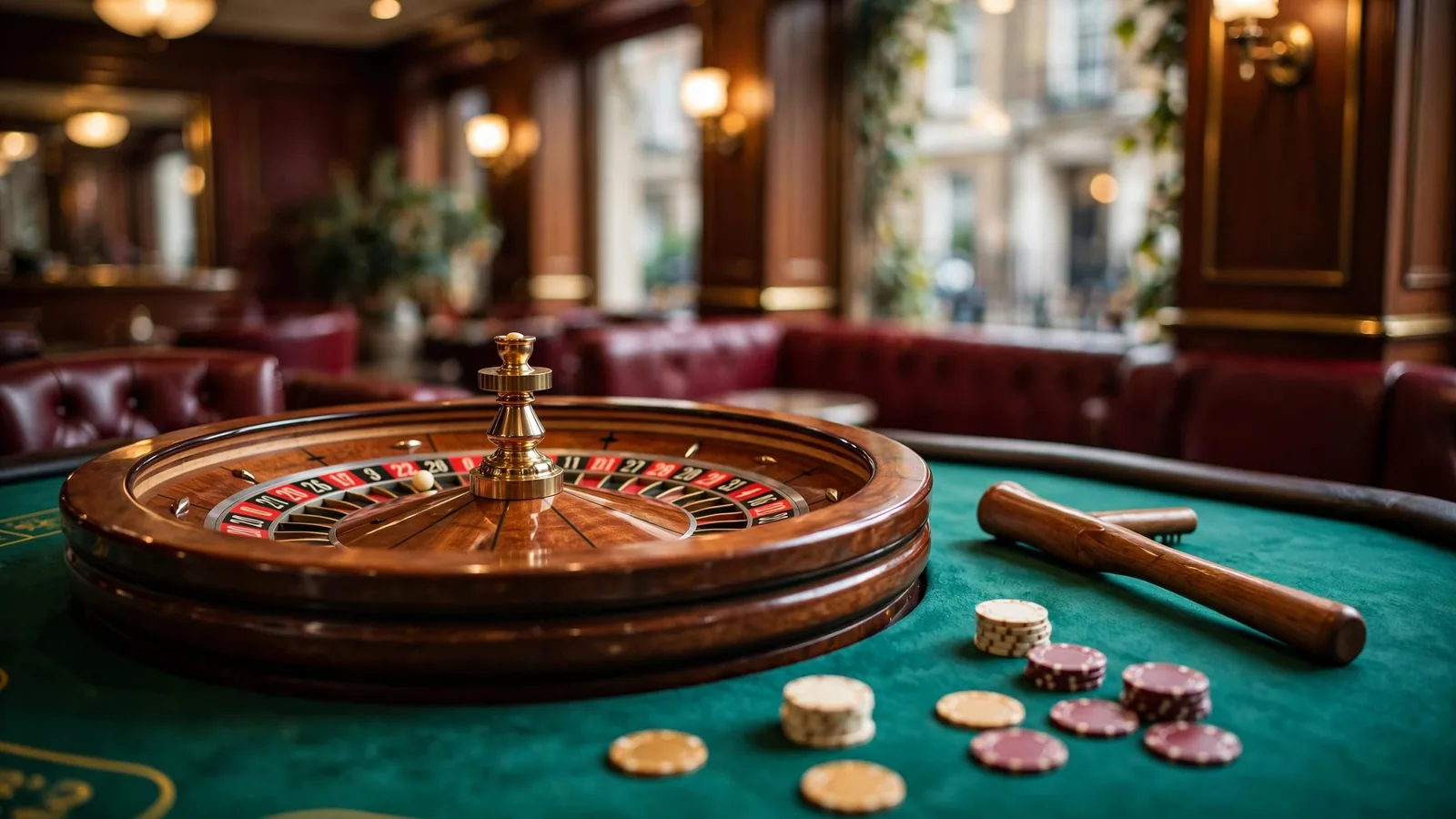
Learn how UK licensing, single-zero odds, payouts and live or automated formats shape the roulette experience.
What a UK Roulette Casino Must Get Right
A European roulette game may look the same from one website to another, but the legal position depends on the operator behind it. In Great Britain, the UK Gambling Commission (UKGC) is the sole regulator of online casino activity. A company offering real-money roulette to customers in England, Scotland or Wales must hold the relevant UKGC operating licence. A foreign location does not remove that requirement: an operator selling into the British market still needs the licence.
That distinction separates a lawful roulette casino from a website that merely accepts a British customer’s registration. An offshore casino without a UKGC licence sits outside the British regulatory system and cannot legally offer real-money roulette to British residents. Access to a site is not evidence that its offer is lawful. The licence is the condition that matters.
Licence before play
The Gambling Act 2005 governs gambling in England, Wales and Scotland; it does not cover Northern Ireland. For British players, online gambling is legal at licensed and regulated sites, and the legal age to gamble online is 18. These are operating conditions, not optional standards that an operator can replace with its own assurances.
Before depositing, the operator’s licence can be checked against the UKGC public register. The check should match the operator responsible for the casino, rather than relying only on a logo or a statement on a landing page. A valid licence establishes that the business is authorised to serve the market and is subject to UKGC requirements. If the operator has no valid UKGC licence, it cannot lawfully offer real-money roulette in Great Britain, however familiar the game or brand may appear.
This baseline applies whether the game is labelled European roulette, offered in a VIP area or placed among other casino products. A particular table’s appearance does not change the operator’s licensing obligation. Nor does the word “European” indicate anything about the legal status of the casino: it describes the roulette product, while the licence belongs to the operator.
Live Casino Lightning Roulette in the UK: What to Check
Checks and account limits
Age verification must take place before a customer is allowed to deposit funds into a gambling account. A registration form alone is not the safeguard; the operator must establish that the customer meets the age requirement before accepting a deposit. The sequence matters: verification first, deposit access afterwards.
Financial controls also form part of the account setup. Remote gambling operators must prompt new customers to set a financial limit before their first deposit and make account-level limit controls accessible. These controls are not merely promotional features to be found after searching through general site information. Their purpose is practical: the account must provide a way to set and manage limits on gambling funds.
For UKGC-licensed live casino operators, the required responsible-gambling tools include deposit limits, loss limits, session time reminders, reality checks, cool-off periods and GamStop self-exclusion. These safeguards cover different points in play: money deposited, losses, time spent, temporary breaks and exclusion from gambling. A live roulette service offered to British customers should therefore be assessed not only by whether its stream and table are available, but by whether the required account controls are present.
Licensed operators must also provide an internal complaints process and access to an approved Alternative Dispute Resolution service. They are required to contribute to the Research, Education and Treatment levy. These duties sit behind the customer-facing game; they are part of the regulated operating framework rather than features that distinguish one roulette wheel from another.
The legal test for online casinos with European roulette is therefore straightforward, even if the surrounding website is not. The operator must hold a current UKGC licence to serve Great Britain, verify age before permitting deposits and provide the applicable financial and responsible-gambling controls. Game choice, account labels and offshore presentation cannot substitute for those conditions. A roulette casino without the required licence is not a lawful real-money option for British residents.
The European Wheel: 37 Pockets and a 2.70% House Edge
European roulette is built around a single-zero wheel. Its pockets are numbered from 1 to 36, with one additional pocket marked zero: 37 possible landing places in total. That count is the starting point for understanding every wager. Before a payout is considered, the wheel gives each pocket the same chance of receiving the ball.
European roulette uses a single-zero wheel with 37 possible landing places in total, numbered from 1 to 36 plus one zero.
The zero is not an extra winning number for either colour, parity or high/low. It is a separate outcome. That distinction is why a bet covering half the numbered pockets does not win on half of all spins. Red, for instance, covers 18 numbers; black covers the other 18. The zero sits outside both groups, leaving each colour with 18 favourable pockets out of 37 rather than 18 out of 36.
The same structure applies to even-money groups such as odd and even, or low and high. Each side includes 18 numbered outcomes, while zero belongs to neither. A wager on one side therefore faces 19 losing pockets: the 18 numbers in the opposite group and zero. The wheel’s green pocket is a small part of its layout, but it changes the arithmetic for every bet that divides the numbered outcomes into two equal groups.
Turning pockets into probability
For a single number, the chance of a hit is one pocket divided by 37. A wager covering two numbers has two possible winning pockets; one covering three has three. The general calculation is the same: count the pockets that satisfy the bet, then divide that count by 37. The remaining pockets are losing outcomes.
This approach separates probability from payout. A bet can cover several numbers and therefore have more ways to win, but that does not by itself establish whether its return is favourable. The payment for a winning result must also be considered. Roulette’s payouts are set against the full set of possible outcomes, including zero, rather than against only the numbered pockets selected for a bet.
Online Casino Tournaments UK: Formats and Rules
For an even-money wager, the arithmetic makes the effect visible. There are 18 winning numbers and 19 losing outcomes. The difference is not caused by red or black being less likely than the other; the two colours have equal numbers of numbered pockets. It comes from the extra outcome that belongs to neither. The same imbalance applies to odd against even and low against high.
A straight-up selection has a narrower chance of success: only one of the 37 pockets wins. Covering more numbers raises the number of favourable outcomes, but the calculation must still include every pocket on the wheel. This is why a European roulette casino game is best understood as a fixed set of possible outcomes, not as a sequence in which a number becomes due after earlier spins.
What the house edge measures
The European wheel’s house edge is 2.70%. It describes the casino’s theoretical share of stakes over a large volume of play, based on the standard game rules. It is not a fee taken from each bet, and it does not predict the result of an individual spin. A player can win or lose on any round; the percentage describes the long-run mathematical balance built into the game.
The mechanism is the gap between the probability of winning and the payout offered. If payouts matched the exact odds implied by all 37 pockets, the house would have no built-in advantage. In standard European roulette, they do not. The single zero creates the key distinction between the two equal halves of the numbered field, and the payout structure leaves the operator with the stated edge.
That percentage is a useful comparison point, but it should not be read as a promised loss rate for a particular session. Short runs can differ sharply from the theoretical average. The house edge says what the rules favour over sustained play; it does not say when that advantage will show up or how much a particular player will finish with.
House Edge
The European wheel’s 2.70% house edge is a long-run mathematical balance, not a predicted loss for a single session.
The practical reading of an online European roulette wheel is therefore straightforward: 37 pockets determine the possible outcomes, zero sits outside the numbered groups, and the standard rules produce a 2.70% house edge. The game’s surface layout may look familiar across online tables, but the underlying count remains the same wherever the standard single-zero version is offered.
Casino Terms: Compare the Return, Not the Headline
A comparison of UKGC-licensed roulette operators needs two separate checks: the game’s published return information and the terms that determine whether roulette play counts towards a bonus. A prominent bonus figure answers neither question. It describes the offer, not the return of the game or the amount of wagering roulette can satisfy.
RTP information and operator comparison
RTP is a stated measure of the proportion of stakes a game is designed to return over extended play. It is not a forecast of an individual session, nor a promise that a particular balance will be recovered. For a meaningful comparison, the relevant roulette game’s RTP information should be accessible before play. If it is difficult to locate, the operator has made a material part of the game’s financial terms harder to assess.
The same label, European roulette, does not settle every commercial detail. The operator’s game information and bonus terms still need to be read together. A page ranking the “best” European roulette casino by headline offer alone leaves out the condition that often determines whether roulette is useful for clearing bonus wagering: its game weighting.
Online Casino Without ID in the UK: What It Means
Game weighting changes the calculation
Game weighting is the share of a qualifying stake counted towards a bonus wagering requirement. A specialist comparison of UK operators describes roulette contributions in a range of 10% to 20%; it also reports that live roulette may count at 10% or 20%, while RNG roulette may count at 100%. These are not interchangeable terms. The applicable rate depends on the operator, the game format and the offer conditions.
At a 10% weighting, only a tenth of eligible roulette stakes is credited towards the requirement; at 20%, a fifth is credited. An RNG game counted at 100% contributes the full qualifying stake. The difference is in progress through the wagering condition, not in the roulette wheel’s odds. A lower weighting means more total roulette stakes are needed to generate the same credited wagering amount.
A specialist review has also listed PartyCasino and Gala Casino live roulette at contributions in the 10%–20% range. That is a report of listed terms, not a substitute for the terms attached to a particular promotion. Rates can differ between offers, and a game may be excluded altogether. The operator’s own bonus rules are the operative document; the game page alone may not state how wagering is counted.
The cap does not make the offer simple
A regulatory summary reports that, since January 2026, wagering requirements for bonuses at licensed operators have been capped at a maximum of 10x. The cap limits the stated multiplier; it does not make all bonuses equally valuable or make roulette count fully. Game weighting, eligible games and other conditions still determine how much play is required in practice.
Attention A low wagering multiplier can still be a poor fit for roulette if the game weighting is low or the specific roulette format is excluded.
For instance, a requirement at the cap with roulette weighted below 100% takes more qualifying roulette stakes to meet than the same requirement with full weighting. That is why the headline multiplier and the game contribution must be assessed together. A lower multiplier can still be a poor fit for roulette if the game weighting is low or the relevant roulette format is excluded.
The useful comparison is therefore not a single “best online European roulette casino” label. It is a set of terms: accessible RTP information for the chosen game, the exact roulette weighting for the offer, whether live and RNG versions are treated differently, and the wagering multiplier. Only the operator’s current offer terms can establish the applicable combination. When those details are clear, the cost of the condition is visible; when they are not, the headline has done its job rather better than the offer.
From a Number Bet to Even Money: Payouts in Practice
A roulette bet is recorded before the spin, and its position determines which result can win. On an online European roulette table, the same basic choices apply whether the game uses a simulated wheel or another format: select a number or group of numbers, place the stake on the corresponding betting area, then wait for the result. The payout is expressed as a ratio to the winning stake.
A ratio such as 35:1 means the winning bet earns 35 units for each unit staked. The original stake is returned as well, so the total credited is the winnings plus that stake. This distinction matters when comparing a displayed payout with the amount that appears in the balance.
Online Bingo in the UK: Formats, Slots and Costs
Number and group bets
A straight-up bet covers one number. If that number wins, the payout is 35:1. It is the highest standard payout among the bets described here, but it also covers the narrowest outcome: one number must match the result. The same straight-up payout applies in European and American roulette.
A split covers two adjacent numbers. The chip sits on the line between them, and either number can produce a win. Its payout is 17:1. A street covers a horizontal row of three numbers; the chip is placed at the end of the row. A winning street pays 11:1.
These bets exchange coverage for payout. A split includes more possible winning numbers than a straight-up bet and pays less for each unit staked. A street covers a wider group again, with a lower payout ratio. The useful comparison is not simply which ratio looks largest, but how many numbers the stake covers to reach it.
Outside bets
Outside bets cover broader categories rather than individual numbers. Red or black, even or odd, and high or low all pay 1:1. A winning stake therefore earns an equal amount in winnings, with the stake also returned.
The bet is placed in the area marked for its category. These options are easier to read at a glance than a number bet: the selected condition either matches the result or it does not. Their lower payout ratio reflects that broader coverage; it does not make any individual spin predictable.
For a fixed stake, the payout ratio gives a direct way to compare the listed bet types. A straight-up win produces the largest return relative to the stake, while an even-money win produces an equal amount in winnings. A higher payout is not the same as a higher likelihood of winning, and the displayed ratio alone does not establish which choice is better for a particular bankroll.
Payout Calculation
Example: 35:1 × £1 = £35 winnings (plus the £1 stake returned).
Anyone comparing real-money European roulette tables should read the payout information shown for the specific game before placing a bet. A themed or VIP-labelled table does not change the meaning of a ratio: the covered result and the stated payout remain the relevant terms. For practice, a free-play version can familiarise a player with selecting a bet and reading its return, without turning that exercise into evidence about future results.
Single-Zero Bets, La Partage and the Cost of a Losing Streak
On a European single-zero wheel, zero is the point at which an even-money bet can lose less than its full stake. With standard rules, a red or black, odd or even, or high or low bet loses when zero appears. At a table offering La Partage, half the stake is returned instead. The rule applies to even-money bets, not to every bet on the layout.
The reduction is measurable. La Partage brings the house edge on those bets down to 1.35%. It changes the settlement of one outcome; it does not change the wheel or make a chosen colour more likely on the next spin. A favourable rule can reduce the cost attached to a bet without turning chance into certainty.
That distinction matters when comparing a European roulette single-zero table with other tables. The table’s stated rules determine whether La Partage applies. A single zero alone does not imply that half a losing even-money stake will be refunded. Where the rule is absent, a zero settles the bet under the table’s standard rules; where it is present, the refund is limited to the covered even-money wagers. Inside bets do not receive this treatment simply because they are placed on the same wheel.
Live Dream Catcher Casino UK: Checks Before Playing
Martingale changes the stake, not the odds
Martingale is a staking system built around doubling the bet after each loss. Its appeal is straightforward: after a losing round, a larger winning bet can recover the earlier losses and leave a gain equal to the original stake. The arithmetic works only if the next bet wins and the player can keep placing the required larger stakes.
Consider a starting stake of £1. After one loss, the next stake becomes £2; after two consecutive losses, it becomes £4; after three, £8. The sequence grows rapidly, while the balance already lost grows with it. A losing streak can therefore put significant pressure on a bankroll before any later win arrives. The system does not cap that exposure.
A win also does not reset the underlying probability. Roulette outcomes are determined by chance, and no betting strategy can predict the final result. Doubling after a loss changes the amount at risk on the next spin, not its likelihood of winning. A longer sequence of losses makes the required stake larger; it does not make a win due.
La Partage and Martingale address different things. La Partage is a table rule that softens the loss on zero for specified outside bets. Martingale is a staking pattern that raises exposure after losses. The first changes the settlement of a bet; the second changes the size of subsequent bets. Neither removes the house edge or protects a bankroll from a losing streak.
Do
- Use La Partage to reduce the cost of losing even-money bets on zero
- Understand that the house edge remains regardless of the staking system
Don’t
- Rely on Martingale to predict a win or remove the house edge
- Assume doubling stakes after a loss protects your bankroll
RNG, Auto-Roulette and Speed Tables: What the Wheel Changes
The main difference between roulette formats is how each spin is produced and how quickly a new round begins. RNG roulette uses software to generate outcomes rather than relying on a physical wheel. This can make play faster, while lower entry stakes are available on some tables; RNG games can start at 10p.
Auto-roulette uses a physical wheel, but the betting and round sequence are automated. Speed roulette is another faster format. A specialist review reports more than 150 spins an hour for speed roulette, compared with 80–100 at a standard table. Those figures describe the pace of play, not an improvement in the odds: faster rounds simply create more opportunities to stake money in the same period.
Starting stakes also depend on the format and table. A specialist review reports that UK live roulette tables can start at 10p, while auto-roulette and speed tables sometimes start at 5p. These are reported starting points, not a promise that every casino or table will offer them. The table’s displayed minimum is the relevant figure before play begins.
That distinction matters to the total amount exposed. A low minimum reduces the smallest possible stake per round, but a faster format can present more betting decisions in an hour. RNG roulette combines simulated outcomes with quicker play; auto-roulette and speed roulette use physical-wheel formats, with speed tables designed to move through rounds more rapidly. The entry stake and the pace should therefore be read together rather than treated as separate selling points.
The European roulette wheel remains a single-zero format across these delivery types. Software simulation or automation changes how a spin is run, not the definition of the game. The displayed rules and table information remain the practical checks when selecting a specific game: the format name alone does not establish its minimum stake or the speed at which that particular table runs.
For a measured comparison, record the minimum stake shown and the stated spin rate, where one is provided. Then consider how many rounds fit the intended session. A lower entry point may make each individual decision smaller; a higher round rate can still increase the number of decisions. Speed is a feature of delivery, not a reduction in the financial cost of playing.
Reading the European Roulette Table Layout
A European roulette table is arranged to translate a chosen number or group of numbers into a marked betting area. The numbered grid sits at the centre of the layout, with separate spaces around it for bets covering broader groups. The wheel has 37 pockets: numbers 1 to 36 and a single zero. On the table, that zero occupies its own marked space rather than joining the numbered grid.
Inside bets are placed on the numbered section. A chip centred on a number marks a single-number selection. Lines and corners between adjacent numbers indicate group bets, so the chip’s position matters: it must touch the intended numbers, not merely sit nearby. The table markings define the selection; the wheel result determines whether it wins. This is a reading of the layout, not a system for forecasting where the ball will land.
Outside bets sit beyond the number grid. Their marked areas cover categories such as red or black, odd or even, low or high, and groups arranged by rows or columns. These choices cover more possible results than a single-number selection, but they do not change the wheel’s pockets. The zero remains a separate outcome, so it is not treated as a red or black number, or as odd or even.
The zero is a separate outcome and is not treated as red or black, or as odd or even.
The table also divides the numbered grid into vertical columns and horizontal rows. A column space applies to the numbers in that column; a row marking applies to the numbers across that row. The dozen areas cover consecutive blocks of numbered results. These labels are useful for locating a bet, but their position on the felt does not imply that one area is more likely to appear than another.
A practical way to read an unfamiliar European roulette casino table is to identify the number grid first, then locate the outside labels and the separate zero space. Chip placement should match the printed boundary for the intended selection. If the chip is on a line between numbers, it represents a different bet from one placed wholly inside a number square.
The European roulette casino table layout is therefore a map of selections, not a strategy in itself. It shows which outcomes a chip covers and keeps the single zero visible as its own result. Knowing where a bet sits prevents a placement mistake; it cannot make chance more predictable.
Roulette Demos and Roulette-Themed Slots Are Different Products
A roulette demo and a slot with roulette in its title are not interchangeable. “Demo” signals a presentation of a game for demonstration or practice; “slot” identifies a different game category. Words such as “European,” “gold,” “platinum” or “3D” in a product name do not establish that a slot follows European roulette rules, or that it uses a roulette wheel at all.
That distinction matters when comparing products. A European roulette demo refers to roulette presented in a non-standard-play context, but the label alone does not confirm what functions are available, how the game is configured or whether a particular version can be accessed. Those details depend on the product itself. A roulette-themed slot, by contrast, should be assessed as a slot rather than assumed to reproduce roulette betting or outcomes. Similar wording is branding, not evidence of shared mechanics.
The same caution applies to searches for a 3D European roulette slot or a European roulette game in gold or platinum editions. Such descriptions may identify a product name or presentation, but they cannot establish its rules, return information or availability. Those points require the specific game’s own information. Without it, assigning roulette odds to a slot would be a category error, not a useful comparison.
In Britain, online slots are subject to rules that do not define roulette play: autoplay is prohibited, and each online slot spin must last at least 2.5 seconds. Those requirements apply when the product is a slot; a roulette-themed name does not turn it into roulette. Likewise, calling a roulette product a demo does not, by itself, establish that it is a slot or that slot rules describe its play.
A sensible comparison starts with the product category and its published rules. For roulette, the relevant information should identify the wheel and betting rules. For a slot, the game information should identify it as a slot and provide its applicable terms. A title containing “roulette” cannot settle either question. If those details are not clear, the name alone is not a basis for treating the product as a roulette demo or as a roulette game.
Product Verification
- Confirm if the product is a roulette game or a roulette-themed slot
- Check the published rules for the specific wheel and betting version
- Review the return information (RTP) for the chosen game
Live Dealer Roulette: A Physical Wheel on a Stream
Live dealer roulette brings a studio table to a screen. A camera carries the game as a human dealer spins a physical wheel and releases the ball; the result comes from that ball’s landing place, rather than a random number generator simulating a spin. The stream is the defining feature of this format, whether the table is labelled European roulette or offered alongside other live games.
That distinction describes how the round is produced, not a different promise about its outcome. A live European roulette table still uses the rules and layout displayed for that particular game. The studio view lets players follow the wheel and ball drop, while the betting interface handles placing and confirming wagers. The dealer’s presence does not change the need to read the table rules before play.
In Great Britain, real-money live roulette is available legally only through an operator holding the relevant UK Gambling Commission licence. A platform without a valid UKGC licence cannot legally offer real-money live roulette to British residents. The licence can be checked on the Commission’s public register before a deposit is made. Operators must also verify a customer’s age before permitting deposits.
UKGC-licensed operators must provide financial and time controls for live casino play. These include deposit limits, loss limits, session time reminders, reality checks, cool-off periods and GamStop self-exclusion. New customers must be prompted to set a financial limit before their first deposit, and account-level limit controls must remain accessible. These are operating requirements, not optional features attached only to a particular live roulette table.
A streamed table can make play feel continuous: the wheel turns, the ball drops, and the next betting round follows. That presentation does not remove the need to manage the account separately from the game. A limit set at account level applies as a control on spending; the live dealer’s pace and the studio stream do not substitute for it. The practical distinction is simple: a live dealer roulette game is a broadcast of a physical wheel, while the safeguards belong to the UKGC-licensed operator providing access to it.
European, American and French Roulette: The Zero Changes the Cost
The main difference between European and American roulette is the extra green pocket. European roulette has 37 pockets; the American wheel has 38, with numbers 1 to 36 alongside a single zero and a double zero. That additional outcome changes the price of a bet even when the selected numbers and payout appear familiar.
The house edge is 2.70% on European roulette and 5.26% on American roulette. In other words, the American version takes a larger expected share of stakes over time. Its basket bet, which covers the zero, double zero, 1 and 2, carries a still higher edge of 7.89%. A payout table alone does not show the full cost: the number of pockets determines how often a winning outcome can occur.
Some American tables add a third green pocket, marked 000. A specialist review reports that this configuration has a 7.69% house edge. That figure describes the table type reported, not a general standard for UK online roulette. The rules displayed for the individual game determine whether it applies.
French roulette is another standard variant, and its lower edge comes from La Partage and En Prison. These rules affect even-money bets when zero appears, reducing the cost of that outcome compared with standard roulette. The advantage is specific to the eligible bets and the table rules; it does not change the underlying chance of the wheel landing on a particular pocket.
For an online European roulette casino game, the useful comparison is therefore not simply “European or French”. It is the combination of wheel, bet and zero rule. American roulette has the higher standard edge, and its basket bet costs more again. French rules can reduce the edge on even-money bets, while European roulette remains the single-zero reference point. A table’s variant name is only a starting point; the rules attached to its bets set the actual terms.
What is the house edge on European roulette compared to American roulette?
European roulette has a 2.70% house edge, compared with 5.26% for American roulette. Some American tables with a 000 pocket have a 7.69% edge.
What are inside and outside roulette wagers?
Inside bets cover specific numbers or small groups, such as a straight-up bet on one number, a split on two adjacent numbers, or a street on three numbers. Outside bets cover broader groups, including red or black, odd or even, and high or low.
How does the 10x wagering cap affect roulette bonuses?
Since January 2026, bonus wagering requirements at UK-licensed operators are capped at 10 times the bonus. Roulette’s contribution toward meeting those requirements still varies: live roulette may count at 10% or 20%, while RNG roulette often counts at 100%.
Top online casinos in the UK
- NightWinBonus: £900 + 400 free spins · Payout speed: 1-3 business days
- Revery PlayBonus: 100% up to€1,000+ 100 FS · Payout speed: 1-3 business days
- ZombillionBonus: Welcome Pack 250% up to £4000 + 200 FS · Payout speed: 1-3 business days
- EvoSpinBonus: 125% up to €2500 + 125 Free Spins · Payout speed: 1-3 business days
- JetsetspinsBonus: 200% Bonus + 100 Free Spins + Free Royal Wheel · Payout speed: 1-3 business days
- NightLuckBonus: Welcome Pack + 805% Up To 6400€ + 280 FS · Payout speed: 1-3 business days