
 Available in GB
Content
- Which Debit Cards UK Casinos Accept
- Card Deposits and Other Ways to Fund an Account
- Check the Account and Payment Route Match
- Deposit Limits and the Amount Available to Play
- Debit-Card Withdrawals: Where the Money Goes and When
- A Fast Deposit Does Not Mean a Fast Payout
- Keeping Card Transactions on a Clear Ownership Trail
- How Payment Method Can Affect Bonus Eligibility
- The Full Cost of a Debit-Card Deposit
- Debit Cards, Credit Cards and UK Gambling Rules
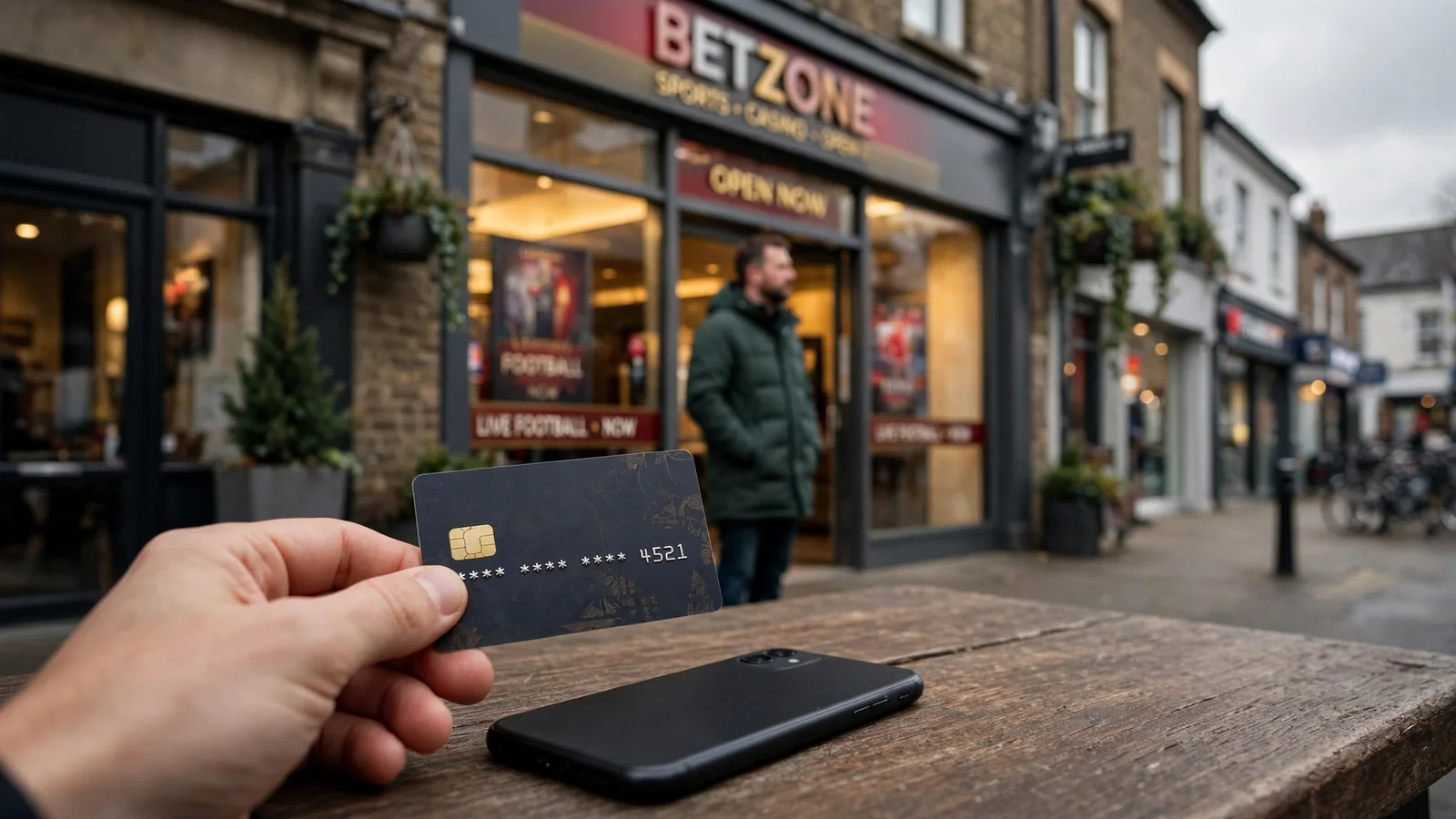
A Visa or Mastercard logo does not guarantee that a specific debit card is eligible for casino payments.
Which Debit Cards UK Casinos Accept
Visa and Mastercard are the debit-card networks most commonly accepted by UK casinos. That makes them the first options to check when comparing online casinos that accept debit-card deposits. It does not mean that every card carrying either logo will work at every casino: the operator’s current cashier is the practical test of availability and eligibility.
The distinction is between a payment network and the particular card product issued under it. A Visa or Mastercard logo identifies the network, but it does not confirm that a casino accepts that specific card for gambling transactions. A payment-method list on a review page can provide a starting point, not a final answer. One specialist review, for instance, may list both networks; the operator’s cashier should still be checked because availability can change and eligibility may depend on the card product.
Visa and Mastercard are starting points, not guarantees
For UK debit-card casinos, Visa and Mastercard are familiar options across the market. A casino listing one or both is indicating support for a network, rather than guaranteeing that every debit card connected to it will be accepted. The cashier is where that broad statement becomes a usable one: it shows the methods the operator currently makes available for the account and lets the cardholder confirm whether the specific product is eligible.
This matters when a card is described in a way that does not make its payment network or product type immediately clear. The brand alone may not settle the question. Nor does a method appearing in a general payment-information page necessarily establish that it is currently available in the UK cashier. A current check avoids treating a familiar logo as approval.
No reliable comparison can rank the best debit-card casinos solely by saying that Visa or Mastercard is accepted. If several operators list the same network, that fact does not distinguish their service or establish that a particular card will be accepted. The relevant comparison is whether the payment option is actually displayed in the operator’s cashier and whether the card product is eligible there. A label on a page is not the transaction result.
Casinos That Accept Diners Club in the UK: How to Check
What to verify in the cashier
The cashier should be checked before relying on a casino’s general payment description. Confirm that Visa or Mastercard appears among the available methods, then check any displayed terms or prompts relating to card eligibility. The name of the network is only one part of the check; the card itself must be a debit product the operator accepts.
If the cashier does not make eligibility clear, the payment information supplied by the operator can be checked before attempting a deposit. A failed attempt does not provide a useful substitute for that check. It establishes only that the transaction did not go through, not whether the issue was the network, the product or some other part of the payment process.
The same approach applies when comparing online casinos that accept debit cards. A list can narrow the field to operators that state support for Visa or Mastercard, but the final comparison should use the live cashier rather than an old summary. Payment options are operational details, and a description that was accurate when written may not represent current availability.
The careful reading is therefore straightforward: Visa and Mastercard are commonly accepted debit-card networks at UK casinos, but acceptance is not universal at card-product level. A casino that names one of these networks has not necessarily confirmed every card bearing its logo. The cashier’s current options, together with any stated eligibility conditions, determine whether the specific debit card is usable.
Top online casinos in the UK
- NightWinBonus: £900 + 400 free spins · Payout speed: 1-3 business days
- Revery PlayBonus: 100% up to€1,000+ 100 FS · Payout speed: 1-3 business days
- ZombillionBonus: Welcome Pack 250% up to £4000 + 200 FS · Payout speed: 1-3 business days
- EvoSpinBonus: 125% up to €2500 + 125 Free Spins · Payout speed: 1-3 business days
- JetsetspinsBonus: 200% Bonus + 100 Free Spins + Free Royal Wheel · Payout speed: 1-3 business days
- NightLuckBonus: Welcome Pack + 805% Up To 6400€ + 280 FS · Payout speed: 1-3 business days
Card Deposits and Other Ways to Fund an Account
A debit card is one way to move money into an online casino account, but the cashier may offer other routes as well. These can include open banking, a bank transfer, a prepaid voucher or Apple Pay. Availability is set by the individual operator, so a method mentioned in general payment information is not necessarily available for every account or transaction. The cashier is the practical check before choosing a route.
Open Banking
A route connecting payments to a bank account through an authorisation process, potentially providing instant deposits and fast withdrawals.
Bank Transfer
Moving funds directly from a bank account using specific instructions and reference details provided by the operator.
Prepaid Voucher
Deposit-only methods, such as Paysafecard, that separate the deposit from a direct bank-card payment.
Apple Pay
A wallet-based deposit route available at participating UKGC-licensed casinos for users with an eligible payment card.
For a debit-card deposit, the card details are entered or selected in the casino cashier and the payment is authorised through the relevant process. This can be a direct option for someone who wants to fund an account from a bank card without first purchasing a voucher or setting up a separate payment service. It is not the only card-related route: where offered, Apple Pay can also be used to make deposits, with the payment authorised through the wallet rather than by entering card details in the same way.
Open banking is a separate route that connects a payment to a bank account through an authorisation process. It may appear in the cashier alongside cards and transfers, but it should not be assumed to be available at every UK casino. A specialist payment-method review describes open banking and bank transfers as capable of providing instant deposits and fast withdrawals at many sites. That is a reported possibility, not a service-level promise: the operator’s cashier and payment terms determine what is offered in a particular case.
A bank transfer moves funds from a bank account rather than charging a debit card. The casino may present it as a distinct payment option, with its own instructions and reference details. It can suit account holders who prefer to initiate a payment through their bank, but its availability and the steps required are operator-specific. Open banking and bank transfer should not be treated as interchangeable labels: a cashier may list them separately, and the route shown determines how the payment is authorised.
Casinos That Accept Wirecard in the UK
A prepaid voucher separates the deposit from a direct bank-card payment. Paysafecard is one such voucher and is deposit-only. That distinction matters when comparing routes: a method that can fund an account does not necessarily provide a way to receive funds back. Its role is limited to putting money into the casino account, so it is not a substitute for a general-purpose payment account.
Apple Pay is accepted for deposits by some UKGC-licensed casinos. It can be a useful alternative when it is listed in the cashier and the customer has an eligible payment card set up in the wallet. Its presence should not be inferred from a casino accepting debit cards; the casino must list Apple Pay as a separate option. Nor does its availability at one operator establish that it will appear at another.
The choice is therefore less about finding a universally superior route and more about matching the cashier’s available methods to the intended transaction. A card may offer a direct payment path; open banking or a transfer may use the bank account through a different authorisation or transfer process; a voucher is confined to deposits; and Apple Pay is an option only at participating sites. Each method has its own instructions, and the cashier should state whether it is currently enabled.
Payment pages can also group methods under labels that look similar while leading to different providers or steps. The method selected in the cashier, rather than a general claim on a landing page, is the relevant detail. If a route is absent from the available options, there is no basis for assuming it can be used by contacting the operator or by attempting to pass the payment through another service. The displayed route sets the available choice.
Do
- Check the live cashier for available payment methods
- Match the payment account name to the casino account holder
- Verify if the specific card product is eligible
Don’t
- Rely solely on general payment-information pages
- Use a relative’s card or shared household account
- Assume availability at one site applies to the whole market
For a debit-card deposit, the basic comparison is straightforward: it is a card payment made through the casino’s listed card option. Other routes broaden the choice but do not all serve the same purpose. Open banking and bank transfers may be presented as alternatives connected to a bank account; Apple Pay is a wallet-based deposit route where supported; Paysafecard is a prepaid, deposit-only voucher. Checking the cashier establishes which of these routes the casino actually offers, without treating availability at one site as a feature of the whole market.
Check the Account and Payment Route Match
A debit-card casino account is easier to manage when the casino account and the payment method are registered to the same person. The names and basic ownership details should line up: an account in one person’s name funded through another person’s card or bank account creates an avoidable mismatch.
That mismatch does not establish that a transaction is improper. It does, however, make ownership less clear and may mean that the casino needs to resolve the discrepancy before handling it. Using payment details that belong to the account holder reduces the chance of basic information becoming a source of friction.
The principle applies across payment routes. A debit card, bank account or other payment account should belong to the customer whose casino account is being funded. Where a payment service is used, its account should also be held in that customer’s name. The relevant point is not the brand of the route but whether its ownership can be matched to the casino account.
Casinos That Accept Bitcoin in the UK: What to Check
For a UK debit-card casino, consistency matters more than collecting several payment methods. A single named account used for both deposits and withdrawals is often the cleanest arrangement. It gives the operator a straightforward set of details to compare and avoids introducing a second person’s account into the transaction history.
What should match
Before making a deposit, the casino account details and payment account details should be checked for obvious differences. The account holder’s name is central; other personal details may also be relevant to the operator’s checks. A shortened name, a change of surname or an old account record can leave information that appears inconsistent, even when the same customer owns both accounts.
The practical distinction is between a genuine difference in presentation and a difference in ownership. A name displayed differently across services may need clarification. A payment method belonging to someone else is a more fundamental mismatch. A relative’s card or a shared household account should not be treated as interchangeable with a payment method registered to the casino customer.
This is not a ranking test for the best debit-card casino sites in the UK. A site’s acceptance of Visa or Mastercard does not, on its own, establish that every card product or ownership arrangement will work. The payment method shown in the cashier and the details attached to it still need to fit the account holder.
Keep one route consistent
Using one named payment account consistently can make the record easier to follow. Deposits and withdrawals then relate to the same customer details, rather than being spread across accounts with different names. It is a simple administrative advantage, not a promise that a transaction will be approved without further checks.
Using a single named payment account consistently for both deposits and withdrawals is often the cleanest arrangement and avoids introducing ownership discrepancies.
Adding another route can complicate the picture if it belongs to a different person or carries details that do not match. Even where a casino displays several payment options, availability does not remove the need for compatible ownership. A payment route being listed is not permission to use another person’s account.
Consistency also helps distinguish a change of method from a change of customer. If the account holder changes payment routes, the new route should still be in that person’s name. Where personal details have changed, keeping the casino account information current helps avoid a preventable discrepancy.
The useful standard is therefore narrow: the casino account and the payment route should identify the same customer, and one named account used consistently is often the clearest arrangement. Choosing a UK online casino that accepts debit cards addresses only the first question—whether a card route is offered. Matching ownership details addresses whether that route fits the account.
Deposit Limits and the Amount Available to Play
A debit-card deposit has two separate thresholds: the smallest amount accepted for a transaction and the largest amount the casino will allow. Neither figure can be assumed to apply across every site or payment route. A specialist casino review places the minimum deposit offered by some sites in the £10–£20 range, with the payment method affecting where the minimum falls. The cashier’s displayed threshold is the relevant figure for a particular account.
Casinos that accept iDEAL in the UK: what to check
The minimum is not a recommendation about how much to deposit. It is an entry condition for the transaction. If the amount entered falls below the casino’s stated floor, the deposit may not proceed; if it meets that floor, the amount credited is still determined by the value entered and accepted. A low minimum therefore says nothing about the maximum available or the amount that can be deposited over time.
Maximums may be set per transaction, per day or per month. A specialist review notes that these ceilings differ according to payment method and account status. A card route may therefore have a different transaction cap from another route, while an account’s permitted ceiling may not match another customer’s. The applicable figures need to be read in the cashier and account controls rather than inferred from the minimum deposit or from a general description of the casino.
The distinction matters when planning a larger deposit. A transaction cap concerns one payment; a daily or monthly ceiling concerns the total allowed across the relevant period. Reaching one does not establish that the others have also been reached, and the permitted amount can depend on the account’s status. Where a payment would exceed a displayed limit, the cashier’s terms determine whether it is rejected or whether a different amount can be entered. No single maximum can be treated as a standard for all debit-card casino deposits.
Account-level financial controls are separate from payment-method ceilings. UKGC rules require remote gambling operators to ask new customers to set a financial limit before they make their first deposit, and to make account controls for limits accessible. This is a customer-set control, not a statement of the casino’s maximum card transaction. The amount available to deposit may consequently be affected both by the operator’s payment limits and by the account’s own settings.
Verify Deposit Limits
- Check the minimum deposit required for the chosen route
- Confirm the maximum limit for the individual transaction
- Review applicable daily or monthly deposit ceilings
- Check the account’s own set financial limits
Before confirming a debit-card deposit, the relevant checks are the minimum shown for that route, the maximum for the individual transaction, any applicable daily or monthly ceiling, and the account’s financial limit. These figures answer different questions. A deposit that fits within the card transaction cap may still be restricted by an account-level limit or a broader deposit ceiling. The amount available to play is therefore not established by the card alone: it is the amount the cashier accepts within the limits applying to that payment and account.
Debit-Card Withdrawals: Where the Money Goes and When
A casino withdrawal to a debit card is not always a direct transfer of winnings to the card in the way a purchase refund appears on a statement. UK anti-money-laundering rules generally require a payout to be returned to the original payment source. Where a debit card funded the account, that can mean the casino routes the eligible amount back through that card, subject to its payment arrangements and the account’s status.
Casinos That Accept USDC in the UK: What’s Confirmed
The cashier’s withdrawal options determine what can be requested. A card used for a deposit may not be displayed as an available destination for every payout, so the listed options matter more than the label attached to the original transaction. The casino may also have to deal with a balance that cannot be returned to the card through its payment system. The relevant destination is the one confirmed in the cashier when the withdrawal is submitted, not an assumption based on how the deposit was made.
The payout process has an operator stage before the payment route comes into play. A withdrawal request is reviewed and approved by the casino; it is not automatically released at the moment it is entered. Payment guides describe internal approval and completed KYC as factors in how quickly a withdrawal is processed. The request can therefore remain under review even when the account balance is available to withdraw.
Payments & Payouts for UK Online Casinos
Verification can have a larger effect on an early payout. A first withdrawal may prompt checks that have not yet been completed, such as confirming account details and the identity associated with the account. If documents or information are requested, the casino must complete its review before releasing the funds. A request that is pending for this reason is different from a payment already approved and sent onward.
For that reason, “fast withdrawal” is not a single processing time. It combines the casino’s review, any outstanding KYC, and the handling of the chosen payout route. Payment guides also identify internal approval and verification status as variables, rather than treating the advertised method as a guarantee of when funds will arrive. The final date depends on the stages actually required for that account and transaction.
Before submitting a debit-card casino withdrawal, the practical checks are the destination shown in the cashier, any conditions attached to the request, and whether KYC is complete. If the casino indicates that the original card cannot receive the full payout, its stated alternative and any additional requirements should be reviewed before approval. That keeps the expected destination clear and avoids treating a submitted request as money already received.
Attention: A withdrawal request is not automatically released; it must first be reviewed and approved by the casino, and any outstanding KYC checks must be completed.
A Fast Deposit Does Not Mean a Fast Payout
A debit-card deposit and a withdrawal are separate payment stages, so the time taken for one does not predict the time taken for the other. A specialist review reports that a card deposit can appear instantly, while a payout may take several business days. The balance can therefore be ready to use before any later withdrawal has reached the account.
That difference matters when comparing a casino with debit card payments. The cashier’s deposit confirmation concerns money moving into the gambling account; it is not a timetable for money moving back out. A quick deposit is a feature of the incoming transaction, not evidence that every payment handled by the casino and the bank will be equally quick.
Bank transfer timing has different dependencies. A specialist review identifies the transfer cut-off time, weekends and currency conversion as factors affecting delivery. A payment submitted after a bank’s processing cut-off may not move through the same stages as one submitted earlier. A weekend can also interrupt ordinary banking processing. If conversion is involved, the transfer includes an additional step rather than simply moving the same currency between accounts.
The practical comparison is therefore between stages and routes, not between a single “fast” and “slow” label. A card may fund the account promptly, while a withdrawal takes several business days; a bank transfer’s delivery can shift with the timing of submission and the currency involved. These are distinct mechanisms, and neither the cashier’s confirmation nor the payment method’s name establishes the final arrival time.
Casinos That Accept Instadebit in the UK
For a debit-card casino site UK players are considering, timing information should be read as a description of the relevant stage. Deposit processing describes when funds become available to play. Withdrawal processing describes how long the return payment takes to arrive. Treating those as interchangeable turns an incoming-payment estimate into a payout promise it does not make.
A useful comparison records the stated timing separately for deposits and withdrawals, then checks whether bank-transfer delivery depends on cut-offs, weekends or conversion. The resulting picture is less tidy than a single speed claim, but more useful for planning: funds available in the casino account and funds received by the bank are not the same balance at the same point in time.
Keeping Card Transactions on a Clear Ownership Trail
A casino that accepts debit card payments may still apply closed-loop rules: money leaving the account is directed back to the payment source used to fund it. This is not simply a preference for one cashier option over another. Returning funds to their origin helps remote gambling licensees check that a transaction is connected to the customer and supports anti-fraud and anti-money-laundering controls.
That ownership trail matters when a payment route changes. A debit-card deposit followed by a request to receive funds through a different route can require the casino to establish who controls that route and why it should be used. An alternative is not necessarily unavailable, but it may bring additional verification before the transaction can proceed. The practical cost is administrative: more checks can mean more steps, and the payment remains subject to the casino’s review.
Ownership Trail
- Anti-money-laundering rules generally require payouts to return to the original payment source
- Changing payment routes may trigger additional verification and administrative checks
- A consistent, identifiable source is the most straightforward way to maintain a clear ownership record
For an online casino that accepts debit card deposits in the UK, the clearest record is generally one identifiable source used consistently. A route that introduces another account or provider can make the trail less direct, even if the account holder considers the alternative their own. The operator may need further evidence to resolve that gap. The purpose is to confirm ownership and legitimacy, not to make one payment method intrinsically better than another.
This also explains why a casino’s displayed payment options do not, by themselves, settle how every later transaction will be handled. The cashier shows what can be used for a deposit; the account’s transaction history and the operator’s checks inform whether a different route is acceptable for funds returning to the customer. Where a debit card is used, retaining a consistent route avoids adding an ownership question to the review.
The distinction is relevant when comparing a top casino that accepts debit card payments with another site. The useful comparison is not just whether card deposits appear in the cashier, but whether the terms describe the return of funds and what verification an alternative route may require. A smooth ownership trail is a procedural advantage, not a promise of a particular outcome or timetable.
Casinos That Accept Upaycard in the UK
How Payment Method Can Affect Bonus Eligibility
A payment method can be accepted for a deposit without qualifying for a promotion. That distinction matters when comparing a debit card casino bonus with an offer attached to another payment route: the cashier confirms whether a deposit can be made, while the promotion’s terms determine whether it counts towards a welcome offer.
PayPal is valued for speed and convenience, but a specialist review reports that it may be excluded from bonus eligibility at some casinos. That is a reported possibility, not a rule that applies across the market. The relevant operator’s promotion terms are decisive: they may name eligible methods, exclude particular ones, or require a qualifying deposit before the offer is credited.
Skrill and Neteller are offered by some sites, and specialist reviews report that these e-wallets are often excluded from promotions. Their appearance in a cashier therefore does not establish that a deposit made with either wallet will qualify. A payment route can work perfectly well and still leave the promotion unavailable. The terms should be checked before the deposit, not after it has been recorded.
The same distinction applies to a debit-card welcome bonus or an offer described as applying to casino games. A promotion may depend on the payment method as well as the game, account and other stated conditions. The label “bonus” does not replace those conditions. The practical comparison is between the amount deposited, the offer actually granted and the requirements attached to it; an advertised headline alone does not establish the value received.
Common Payment Exclusions
Some e-wallets, such as Skrill and Neteller, are often excluded from promotions. Similarly, PayPal may be excluded at some casinos. Always check the specific promotion terms to see if your chosen payment method is eligible for the bonus.
A useful check is to read the promotion’s payment exclusions alongside the cashier options. If the chosen method is excluded, selecting it may mean receiving no offer even though the deposit succeeds. If the terms are unclear, the promotion should not be treated as part of the transaction’s value until the operator confirms eligibility. That keeps the calculation tied to what will actually be credited, rather than to a headline that may not apply.
The Full Cost of a Debit-Card Deposit
The amount debited from a card can differ from the amount credited to a casino account. A specialist review identifies several possible cost points: a casino charge, a payment-provider fee, an issuer or bank fee, currency conversion and a card-network charge. Which ones apply depends on the payment route and the parties processing it; a listed fee is not necessarily the full cost.
Currency conversion deserves separate attention. If the account balance and card transaction are not in the same currency, the exchange rate may include a spread: the rate used can be less favourable than the reference rate. A specialist review notes that this spread can cost more than a visible flat fee. The fee shown at checkout therefore cannot, by itself, establish which route costs less.
For a deposit by debit card at a UK casino, the useful comparison is the final amount taken from the bank account against the amount credited to the casino balance. That means checking the casino’s payment terms, any fee displayed by the provider, and the bank or card issuer’s charges. If conversion applies, the exchange rate and the resulting amount matter more than a headline “no fee” label.
The same method should be used when comparing other payment routes: assess the actual amount for the intended transaction, not a general claim about which method is cheapest. A route with no stated fixed charge may still carry a conversion cost or a fee imposed elsewhere in the chain. Conversely, a visible charge does not prove that another route would be cheaper once all costs are counted.
Casinos That Accept Tether in the UK: Payment Checks
There is no universal lowest-cost option. The final calculation depends on the casino, provider, issuer, currency and network involved. A debit-card deposit bonus changes the promotion terms, not the arithmetic of any payment charges.
Debit Cards, Credit Cards and UK Gambling Rules
The distinction between debit and credit cards is a legal one, not just a difference in how a card account is funded. A Visa debit card draws on money held in a bank account. A credit card provides borrowing. For gambling deposits at UK-licensed casinos, only the first category is permitted.
The UK ban on credit-card gambling took effect on 14 April 2020 and remains in force. Remote gambling licensees cannot accept credit-card payments for gambling, including payments routed through a money service business. The restriction also covers a wallet payment where that wallet allows credit-card funds to be used for gambling. Changing the route does not change the source of the money.
That leaves debit cards as a permitted card type, but it does not mean every card product will work at every casino. A card may be branded by Visa or Mastercard while its eligibility depends on the product and the casino’s payment arrangements. The cashier is the practical check: it shows which methods are available for that account. A site displaying a card logo elsewhere is not the same as a confirmed payment option.
A safe debit-card casino is therefore not defined by the card brand alone. The relevant boundary is whether the operator holds the required UK Gambling Commission licence and whether the cashier accepts the specific debit-card product. Remote gambling operators serving the British market must be licensed, regardless of where they are based. The credit-card prohibition applies to licensed gambling, while a debit card does not turn an unlicensed site into a regulated one.
For a Visa debit card casino in the UK, the governing rule is straightforward: debit-card payments may be accepted, subject to the casino’s terms and payment availability; credit-card payments for gambling are prohibited. The ban has not been relaxed.
What is the fastest withdrawal method for UK casinos?
PayPal, open banking and debit cards linked to fast payout systems are generally among the quickest options. The casino’s approval process and whether your account is verified also affect how quickly you receive funds.
Why must withdrawals return to the deposit method?
Returning funds to the original payment source is a common anti-fraud and anti-money-laundering control. Using the same named account for deposits and withdrawals can also reduce avoidable transaction delays.
Do UK casino withdrawals require verification?
Verification may be needed, particularly for a first withdrawal, and completing it can affect processing time.
Are Visa and Mastercard deposits definitely debit cards?
No. The Visa or Mastercard logo identifies the payment network, not whether a specific card is a debit card or is eligible for gambling transactions. Check the casino cashier and the card’s terms.
Can I use a credit card at 333 Casino in Great Britain?
No. Credit-card gambling has been banned at UKGC-licensed casinos since 14 April 2020.